
If you’ve ever asked “what size saddle do I need?” and gotten five different answers, you’re not alone. Saddle sizing is more personal than most riders expect.
Here’s the honest answer from a saddle maker: there’s no set formula. At Slone Saddles, we sit riders in different sizes and give our opinion, but nothing is set in stone. This guide gives you a smart place to start, explains what to pay attention to, and helps you land on the right seat size without second-guessing it.
What “Saddle Size” Actually Means
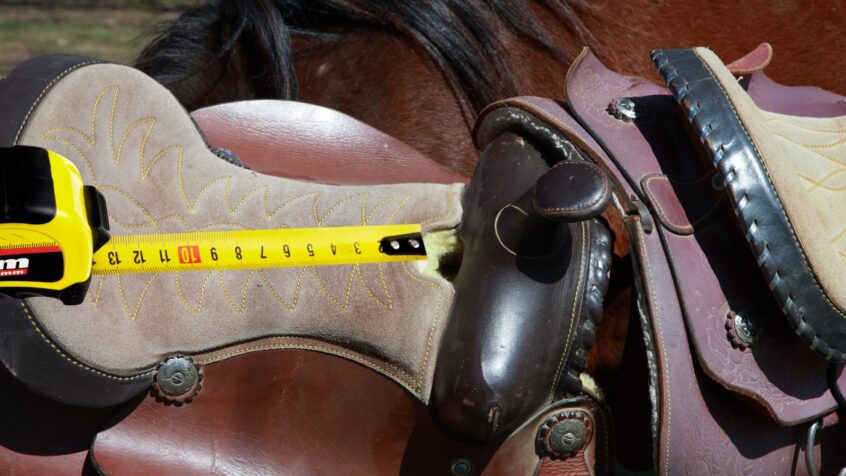
When someone talks about saddle size, they mean the seat size, the distance from the base of the horn to the top of the cantle, in inches. A 14-inch saddle has a shorter seat than a 15-inch saddle.
Seat size is about you. It has nothing to do with whether the saddle fits your horse. Your horse’s fit is decided by the tree and the shape of his back, and that’s covered in our guide to how to measure a horse for a saddle. You need both to be right, and they’re two separate decisions.
Rough Starting Points for Seat Size
Looking for a saddle seat size chart? Here’s a loose guide. These are starting points, not rules.
| Rider | Common starting range |
|---|---|
| Smaller riders and younger riders | 12″ to 14″ |
| Many adult riders | 14″ to 15.5″ |
| Larger or taller riders | 15.5″ to 16″ |
Slone builds seat sizes from 12 to 16 inches in half-inch steps, so you can fine-tune well beyond a rough range.
Why There’s No Perfect Formula
Two riders with the same height and weight can want different seat sizes. Leg length, build, and how you like to sit all matter, and so does what you’re used to riding.
We see this all the time. Riders tend to guess bigger than they need. A rider who is sure he needs a 14.5 or a 15 can end up happiest in a 13.5 or a 14, and it can be hard to change a rider’s mind until they sit in the smaller size. That’s why we always recommend sitting in a few sizes when you can.
How to Figure Out Your Saddle Size
- Start with your current saddle. If you ride one now and like it, note the seat size. That’s your best baseline.
- Pick a starting range. Use the table above, then think about your height, leg length, and build.
- Sit in more than one size. Try the size you think you need and one on each side of it. The one that feels right often isn’t the one you expected.
- Check your room. A common rule of thumb is about a hand’s width between your body and the swells in front of you, and a few fingers of room behind you before the cantle.
- Wear what you ride in. Boots, chaps, and how you normally sit all change how a seat feels.
- Think about your event. Some riders like a snug, secure seat and others want more room to move.
Signs Your Seat Is Too Big or Too Small
Too Big
You slide around in the seat, feel “lost” in it, or have a hard time staying centered at speed. Extra space can make it harder to stay balanced when you ask a lot from your horse.
Too Small
Your legs feel cramped, you feel pushed against the swells or the cantle, or you can’t get comfortable no matter how you sit. If you’re between sizes, trying the next one up is worth it.
Seat Size by Event
Your event doesn’t set your seat size, but it’s worth mentioning when you ask for a recommendation. A roper, a barrel racer, and an all-around rider can each have different preferences for how snug or roomy a seat should feel.
- Shopping for a roper? Browse our team roping saddles and calf roping saddles.
- Barrel racing? Read what to look for in a barrel racing saddle.
- Riding more than one event? See what to look for in an all-around saddle.
- Bulldogging? Our steer wrestling saddles are built for leaving the horse fast, and our steer wrestling vs. roping saddle guide explains the difference.
Can’t Visit in Person? Here’s What to Tell Us
If you can stop by our shop in Cuero, we’ll sit you in different sizes and give you our opinion. If you can’t, you can still get a good recommendation. Send us:
- Your height and build
- The size of the saddle you ride now, and whether you like it
- What events you ride
- Whether you prefer a snug seat or more room
That gives us enough to point you toward a good starting size.
Pick Your Size, Then Design Your Saddle
Once you know your seat size, the fun part starts: choosing your series, tooling, leather, and finish. Our saddle design terms guide explains every option in plain English. When you’re ready, start your saddle design, request a quote, or contact us and we’ll help you work out your size.
Your horse’s fit is the other half of the equation. Our guide on how to fit a saddle to a horse covers it.
Frequently Asked Questions
What size saddle do I need?
Most adults land somewhere between a 14-inch and a 16-inch seat, but there’s no single right answer. Seat size is personal preference. Height, build, leg length, and how you like to sit all matter, so the most reliable way to find your size is to sit in a few different sizes and see which one feels right.
Is there a saddle seat size chart?
There are rough starting points, but no chart is a rule. Smaller riders often start around 12 to 14 inches, many adults start between 14 and 15.5 inches, and larger or taller riders often start between 15.5 and 16 inches. Treat those numbers as a place to begin, then confirm by sitting in the saddle.
How is a western saddle seat size measured?
Most makers measure the seat from the base of the horn to the top of the cantle. Exact measuring points can vary slightly from one maker to the next, which is one more reason a size on paper isn’t a guarantee of fit.
Does my height or weight decide my saddle size?
Not by themselves. Two riders of the same height and weight can prefer different seat sizes, because leg length, build, and personal preference all play a part. Height and weight get you into the right neighborhood, and sitting in the saddle gets you the final answer.
What if I’m between two seat sizes?
Sit in both if you can. Riders are often surprised by which one feels better, and many find they need a smaller seat than they expected. If you can’t try both, tell us your height, build, and current saddle size and we’ll give you our opinion.
Is a bigger seat more comfortable?
Not necessarily. A seat that’s too big lets you slide around, which makes it harder to stay balanced, especially at speed. A seat that’s too small can feel cramped. The goal is a seat that lets you sit comfortably and move without feeling lost in it.
How much room should I have in a western saddle seat?
A common rule of thumb is about a hand’s width between your body and the swells in front, and a few fingers of room behind you before you reach the cantle. It’s a starting point, and how it feels while you sit and move is the better test.
Does seat size change for different events?
It can. Many roping and barrel racing riders prefer a seat that feels snug and secure, while others like more room to move. Your event is worth mentioning when you ask for a size recommendation.
What seat sizes does Slone offer?
Slone builds seat sizes from 12 to 16 inches in half-inch steps, so there’s room to dial in the exact size you want.
Does seat size have anything to do with how the saddle fits my horse?
No. Seat size is about the rider. How the saddle fits your horse depends on the tree and the shape of your horse’s back. Our guide on measuring a horse for a saddle explains that side of the fit.
Can I sit in different sizes before I order?
If you can stop by the shop in Cuero, we’ll sit you in different sizes and give you our opinion. If you can’t visit, contact us with your height, build, current saddle size, and how you ride, and we’ll help you narrow it down.
Do my boots, chaps, or riding style change the size I need?
They can. Thick boots, chaps, and how you like to sit all change how a seat feels. Think about how you actually ride, and wear what you normally wear when you test a size.
Should a child buy a bigger saddle to grow into?
A saddle that’s too big can be harder for a young rider to sit and balance in. Growth is hard to predict, so it’s best to talk with us about the rider’s current size and what makes sense for them.
How do I find my saddle size if I can’t visit in person?
Contact us and tell us your height, build, the size of the saddle you ride now, whether you like it, and what events you ride. That gives us a starting point, and we’ll give you our opinion on the size to try.