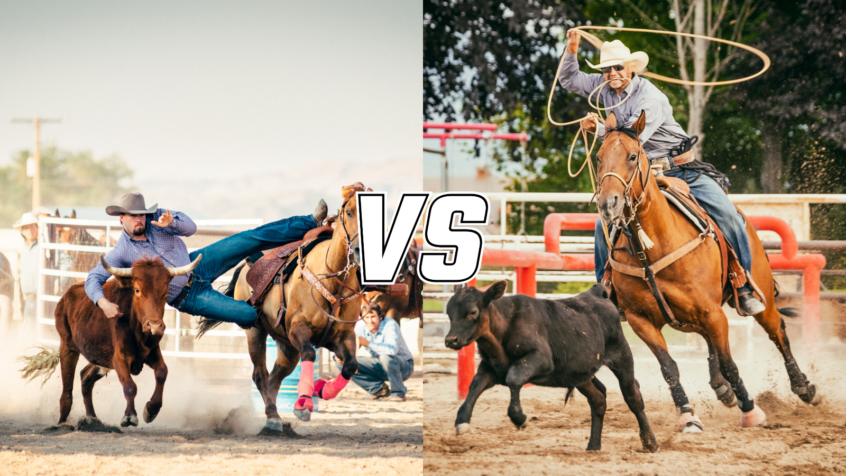
Steer wrestlers and ropers both ride fast, both work off the same kind of horse, and both depend on a saddle that can take a beating. But a steer wrestling saddle and a roping saddle are built for opposite jobs. One has to keep you in the saddle. The other has to let you out of it.
If you’re shopping for a bulldogging saddle, or wondering whether your roping saddle can do double duty, this guide explains what changes from one to the other and why it matters in the arena.
The Short Answer
A roping saddle is built to hold you secure while a rope comes tight. A bulldogging saddle is built so you can slide off the side without catching a hip, a hand, or a stirrup on the way. Everything that is different about the two saddles follows from that.
| Feature | Steer Wrestling | Team Roping Saddle |
|---|---|---|
| Main job | Let the rider leave the horse fast | Keep the rider secure through the run |
| Seat | Easy to slide off | Typically more secure, with more seat |
| Cantle | Virtually no dish | Typically more dish for a locked-in feel |
| Horn | Egg shaped, easy for a big hand to hold | Built for dallies and rope work |
| Fit | Wide and low to reduce leverage | Varies by series and rider |
| Tree and rigging | Reinforced tree, riggings double riveted to the skirts | Reinforced in the stressed areas |
What a Bulldogging Saddle Has to Do
In steer wrestling, the rider launches from a running horse onto a steer, grabs the horns, and brings the steer to a stop. It happens in seconds, and the saddle is part of the move before the rider ever touches the ground.
That means a good bulldogging saddle has to do three things well:
- Get out of the way. The seat and cantle can’t hold you back when you leave the horse.
- Give you something to hold. The horn is your handle as you make the transition from horse to steer.
- Stay steady under the horse. When your weight hangs off the side, the saddle shouldn’t twist or lever.
Steer Wrestling Saddle vs. Roping Saddle: The Four Big Differences
1. The Seat
Roping saddles generally give you a seat that holds you in place, because a roper has to stay planted when the rope comes tight. A dogging saddle goes the other way. At Slone, our dogging saddle seats are designed to be easy to slide off.
2. The Cantle
This is the difference you can see from across the arena. The cantle on a Slone dogging saddle has virtually no dish in it, so it doesn’t hook your hip as you make the catch. A deeper, more dished cantle is a plus for a roper who wants to stay put, but it can snag a bulldogger on the way out.
3. The Horn
A roping horn is a working tool. Ropers dally around it or tie to it, so it has to be built for rope. A steer wrestler isn’t using a rope at all. The egg-shaped horn on a bulldogging saddle is designed to be easy for a big hand to hold, so the rider has something solid to grip as they leave the horse.
4. The Fit
Slone’s dogging saddles are designed with the same wide, low fit as our calf roping saddles. The purpose is to reduce leverage when the competitor is hanging off to the side. A saddle that sits lower and wider moves less under your weight, which helps keep the saddle steady on the horse while you work.
What the Two Saddles Have in Common
Despite the differences, steer wrestling and roping saddles share the same foundation: they have to be tough. Slone reinforces the tree in the stressed areas on our dogging saddles, the same as on our calf and team ropers. The riggings are all double riveted to the skirts, because these saddles take a load that a trail saddle never will.
Where Calf Roping Saddles Fit In
If you’re comparing options, the closest relative to a dogging saddle is the calf roping saddle. Both riders leave the horse in a hurry, and both benefit from a wide, low fit. The difference is the cantle, the seat, and the horn. A calf roper still ties a rope to the horn, while a bulldogger needs a horn made to be held. A team roping saddle is a further step away: it’s built to keep you in the seat, not get you out of it.
Can You Use One Saddle for Both?
Technically you can put a rider on any saddle. In practice, the seat, cantle, and horn on a steer wrestling saddle are shaped for dismounting and the catch, not for dallies or holding a rope. Riders who do both events often keep a separate saddle for each. If you rope and dog and want to talk through your setup, send us a quote request and tell us how you ride.
What to Look for When Choosing a Steer Wrestling Saddle
- Fit for your horse. A great design on the wrong tree still causes problems. Start with our guides on how to measure a horse for a saddle and how to fit a saddle to a horse.
- Seat size. Slone builds seat sizes from 12 to 16 inches in half-inch steps. Pick the size that works for your build and how you move.
- Series and design. Choose your series, tooling, leather color, and finish. Not sure what a term means? Our saddle design terms guide explains each option in plain English.
- Build quality. Look for a reinforced tree and double-riveted riggings. Those are what hold up to a rider hanging off the side.
Build Your Custom Saddle with Slone
Slone Saddles is a family-owned saddle maker in Cuero, Texas, with a long history of building saddles for rodeo competitors. Our steer wrestling saddles are built with the seat, cantle, horn, and fit described above. You can start your saddle design online, or request a quote and we’ll help you work through the options.
Frequently Asked Questions
What is a steer wrestling saddle?
A steer wrestling saddle, also called a bulldogging or dogging saddle, is a saddle built for the rodeo event where the rider leaves a running horse to catch and wrestle a steer. It’s designed to let the rider slide off the side quickly, with a low-dish cantle, an easy-to-grip horn, and a wide, low fit.
What’s the difference between a steer wrestling saddle and a roping saddle?
A roping saddle is built to keep the rider planted while a rope comes tight, so it has more seat and a horn made for rope work. A bulldogging saddle is built to let the rider leave the horse, so the seat is easy to slide off, the cantle has virtually no dish, and the horn is shaped for a hand to hold instead of a rope.
Is a bulldogging saddle the same as a dogging saddle?
Yes. Bulldogging, dogging, and steer wrestling all describe the same event, and the saddles go by all three names. Slone’s design page calls them dogging saddles.
Why does a dogging saddle have almost no dish in the cantle?
A cantle with virtually no dish won’t hook the rider’s hip as they make the catch. A deep, dished cantle is great for staying put in a roping run, but it can snag a bulldogger who is trying to slide off the side in one motion.
Why is the horn on a bulldogging saddle egg shaped?
The egg-shaped horn is designed to be easy for a big hand to hold as the rider makes the transition from the horse to the steer. Unlike a roping horn, it isn’t built to take dallies or a tied rope.
Can you rope with a bulldogging saddle?
It isn’t what the saddle is built for. The horn and seat are shaped for dismounting and the catch, not for dallies or holding a rope. If you rope and dog, talk with us about the right setup for each event.
Is a dogging saddle the same as a calf roping saddle?
They share the same wide, low fit, which reduces leverage when the rider is hanging off to the side. The differences are in the details: a dogging saddle has a seat that’s easy to slide off, a cantle with virtually no dish, and an egg-shaped horn made to be held.
What does a wide, low fit do for a dogging saddle?
A wide, low fit sits closer to the horse’s back, which reduces leverage on the saddle when the rider is hanging off to the side. Less leverage means the saddle stays steadier under the horse while the rider leaves it.
Does a bulldogging saddle need a reinforced tree?
Yes. The tree takes the stress of a rider hanging off the side at speed. On Slone’s dogging saddles, the tree is reinforced in the stressed areas, the same as on the calf and team roping saddles.
What seat size should a steer wrestler choose?
Slone builds seat sizes from 12 to 16 inches in half-inch steps. The right size depends on the rider, so the best approach is to tell us your height, build, and how you ride, and we’ll point you to the right size.
Can I customize a dogging saddle?
Yes. Slone builds custom saddles, so you can choose the series and design details such as tooling, leather color, and finish. Our saddle design terms guide explains what each option means.
How do I know a saddle will fit my horse?
Fit starts with the horse. Measure your horse’s withers and saddle support area, then take the fit photos requested on our saddle design form. Our measuring guide walks through every step.
Do I need a separate saddle for steer wrestling and roping?
Many riders who do both keep a separate saddle for each event, because the seat, cantle, and horn are built for opposite jobs. If you want one saddle to cover both, contact us and we’ll talk through what you actually do in the arena.
Where can I get a custom saddle for steer wrestling?
Slone Saddles, a family-owned saddle maker in Cuero, Texas, builds custom saddles for steer wrestlers across the country. You can start a saddle design online or send us a quote request.