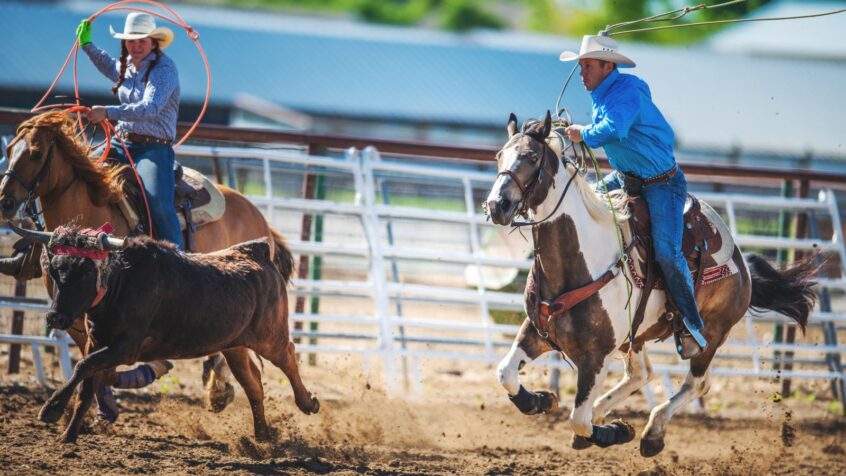
Team roping asks more of a saddle than almost any other rodeo event. You’re not just riding — you’re throwing, dallying, sitting back hard against the weight of a steer, and controlling your horse through the corner, all in a matter of seconds. Finding the best team roping saddles means understanding what those specific demands do to a tree, a horn, and a rigging system, not just picking whatever looks good in a catalog. Here’s what actually matters, and how to compare your options.
What Makes a Saddle Built for Team Roping
A true team roping saddle is engineered differently than a calf roping or all-around saddle, because the moment right after the catch puts unique stress on specific parts of the saddle.
Horn Design and Dally Security
The horn takes the full force of the dally, and a poorly shaped horn lets the rope slip when it matters most. A slight lip on the backside of the horn helps keep the dally from popping off during a hard pull — a small detail that makes a real difference at speed.
Seat Depth and Rigging Position
Unlike a calf roping saddle, which is built for a rider who gets off quickly, a team roping saddle needs a deeper seat. After the catch, you’re sitting back down, taking your dally, and riding your horse around the corner to set up your partner — the seat has to hold you securely through that whole sequence, not just at the start.
Tree Strength in Stressed Areas
The tree is where team roping saddles either hold up or fail. Reinforcement in the high-stress zones — where the dally load and the horse’s motion put the most strain — is what separates a saddle that lasts for years from one that starts breaking down after a season of hard use.
Front-End Height
Team roping saddles are typically built with a slightly higher front end than calf roping saddles. That difference in balance reflects the different job: a calf roper needs to get off and to the ground fast, while a team roper stays mounted and needs stability through the corner.
Best Team Roping Saddles by Use Case
Best All-Around Team Roping Saddle: Diamond S Series
The Diamond S Series is built on a tree designed specifically for competition use, with a 10-year tree warranty behind it. It’s the strongest starting point for ropers who want proven, event-specific geometry without going fully custom.
Best for Tod Slone’s Own Design: Tod Slone Signature Series
The Tod Slone Signature Series reflects decades of tree design from a seven-time PRCA NFR Tie-Down Roper who’s ridden and refined these saddles from the arena, not just the workbench. It’s the closest thing to riding what Tod himself would build for his own competition run.
Best Pro-Endorsed Option: Chase Tryan Series
The Chase Tryan Series carries the name of a top-earning professional heeler who has ridden Slone saddles built specifically to fit his horses. Slone was recently featured alongside a handful of other saddle makers in a roundup of what top professional team ropers actually ride — real validation from riders who can’t afford equipment that doesn’t hold up.
Custom vs. Off-the-Rack for Team Roping
An off-the-rack saddle uses a standard tree and asks your horse to fit it. For team roping specifically, that’s a bigger gamble than in most events — the forces involved during a dally and a hard sit-back amplify any fit problems that would otherwise be minor. A custom-built tree, sized to your horse’s back and your own seat preferences, holds up better under that kind of repeated stress and keeps you and your horse balanced through the whole run.
If you’re ready to talk through tree, seat, and rigging options for your own horse, start your saddle design and we’ll build it around your event and your horse’s build.
Frequently Asked Questions
What makes a saddle good for team roping specifically?
A team roping saddle needs a secure horn for dallying, a deeper seat to hold the rider through the sit-back and corner, reinforced tree strength in high-stress areas, and rigging built to handle sudden, hard loads.
What’s the difference between a team roping saddle and a calf roping saddle?
Calf roping saddles are built for a rider who dismounts quickly, with a lower front end and shallower seat. Team roping saddles have a deeper seat and slightly higher front end, since the rider stays mounted and needs stability through the corner after the catch.
Why does horn design matter so much in team roping?
The horn absorbs the full force of the dally. A horn shaped without enough of a lip on the backside can let the rope slip at exactly the moment the pull is hardest.
What is dally security, and why does it matter?
Dally security refers to how well the horn holds the rope once it’s wrapped. Poor dally security can mean lost catches or, worse, a rope slipping unexpectedly under load.
How deep should the seat be on a team roping saddle?
Deep enough to keep you secure through the sit-back and the corner, without being so deep it restricts your movement during the throw. This is one of the areas where custom fit makes a noticeable difference.
What rigging setup works best for team roping?
Rigging that’s double-riveted to the skirt distributes the pull more evenly across the tree, which keeps the saddle more secure on the horse’s back during hard stops and dallies.
Do heading and heeling require different saddles?
Not fundamentally different saddles, but riders often have personal preferences on seat size and rigging position based on their position and roping style. Custom builds let you dial that in.
How much does tree strength matter for team roping?
A great deal. The tree absorbs repeated stress from dallying and hard stops, and reinforcement in the high-load areas is what determines whether a saddle lasts for years or starts breaking down after a season.
Is a custom saddle worth it for team roping, or is off-the-rack fine?
Off-the-rack can work for casual riders, but the forces involved in team roping amplify fit problems more than most events. A custom tree built around your horse holds up better and keeps both of you more balanced through the run.
What tree width fits most roping horses?
It varies horse to horse — width depends on wither shape and shoulder angle, not the discipline. That’s part of why a properly fitted tree matters more than picking a size off a chart.
How long does a good team roping saddle typically last?
A well-built saddle with a reinforced tree and quality leather can hold up for many years of regular competition use, especially with routine care and periodic fit checks.
What’s the break-in period like for a new roping saddle?
Most riders notice the leather softening and the seat settling over the first several rides. A well-built tree shouldn’t need a “break-in” for fit — that should be right from the start.
Does a pro-endorsed saddle line perform differently than a standard model?
Pro-endorsed lines are typically refined through direct feedback from competitors putting the saddle through real competition use, which can mean small but meaningful differences in seat shape, horn design, or rigging position.
What warranty should I expect on a team roping saddle tree?
Look for a tree warranty of several years at minimum — it’s one of the clearest signals a saddle maker stands behind the strength of their build.
What should I compare when shopping for team roping saddles online?
Focus on tree design and warranty, horn shape, seat depth, and rigging construction — not just leather tooling or price. Those structural details are what actually affect performance during a run.