
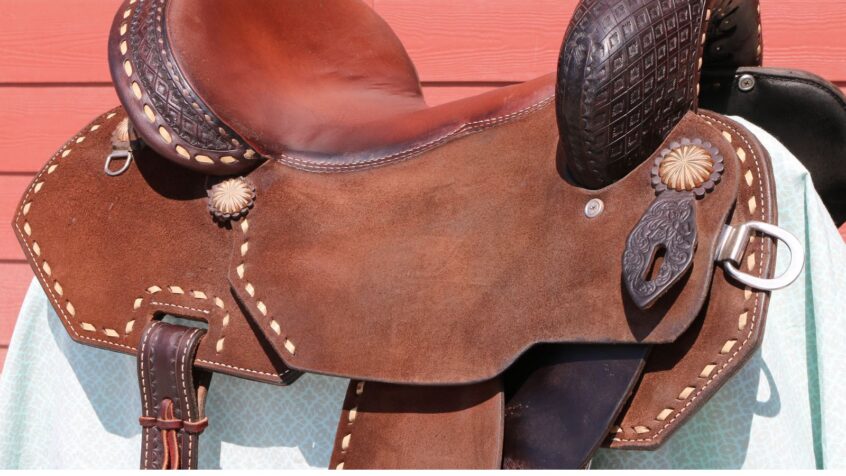
Rough-out and suede leather give a saddle grip and a look all its own, but they don’t behave like smooth leather. If you’ve been wondering how to clean roughout leather without flattening the nap or making it slick, the short answer is to brush first, use as little moisture as possible, and go light on oils. Here’s the full routine, built for the rough-out and suede parts of a Slone saddle.
What Is Rough-Out Leather?
Rough-out leather is leather turned so the rough side faces out. In our design forms, an “All Rough Out” saddle means no tooling, with the rough side of the leather on the outside. The texture gives the rider grip, and it shows up in several places on a saddle:
- Entire saddles built “all rough out”
- The non-tooled portions of a partially tooled saddle, where you choose either rough out or smooth out
- Pencil roll binders and stirrup leathers
- Seats, where suede is a popular choice in solid or quilted styles
Suede and rough-out both have a napped, fuzzy surface, which is why they respond to care the same way. Not sure what the terms on our design forms mean? We break them down in our guide to saddle design terms.
Why Rough-Out and Suede Need Different Care
The nap is made of short, loose fibers, and those fibers are what give you grip. Heavy soap, thick conditioner, and too much water can leave residue that mats them down, darken the leather, or make the surface slick. Dirt also settles deep into the nap, which is why dry brushing does most of the work.
What You’ll Need
- A stiff nylon-bristle brush or a dedicated suede brush
- A suede eraser (also sold as a suede block)
- Clean, dry, light-colored cloths so no dye transfers
- Cornstarch for oily or sweaty spots
- A soft toothbrush for seams and tight spots
- A well-ventilated spot out of direct sun
How to Clean Roughout Leather, Step by Step
1. Brush Off Dry Dirt First
Before anything damp touches the saddle, brush away dust, hair, and dried mud. Use light, even strokes, brushing in one direction at first and then in short back-and-forth strokes to lift the nap. Don’t scrub one spot hard, which can leave a bald patch. Brushing also helps raise a flattened nap, and for most suede seats it’s the only cleaning you’ll need.
2. Lift Surface Marks With a Suede Eraser
For scuffs and shiny spots, rub the suede eraser over the mark with gentle pressure, then brush the crumbs away.
3. Treat Oil and Sweat Spots
Sprinkle cornstarch over an oily or sweaty spot, let it sit for a few hours or overnight so it can absorb the oil, then brush it off. Repeat on stubborn spots instead of scrubbing.
4. Use Moisture Sparingly, Only If Needed
If the leather is still dirty after dry cleaning, wipe it with a clean cloth barely dampened with plain water and blot instead of scrubbing. For heavy soil, a liquid saddle soap used sparingly and rinsed well is the usual choice, since bar and cake soaps tend to build up and are harder to rinse out. Test a hidden spot first, and never soak the saddle or submerge it.
5. Dry Slowly, Then Brush the Nap Back Up
Let the saddle air dry completely in a ventilated space, away from direct sun and heat sources. Once it’s dry, give the rough-out a final brushing to bring the nap back.
Should You Condition Rough-Out Leather?
This is where advice varies. University of Florida IFAS Extension notes that rough-out saddles can be cleaned and oiled the same way as smooth ones, that suede typically doesn’t need conditioning, and that conditioners are an especially good choice for the back of fenders, stirrup leathers, and rigging parts that touch the horse. Many riders prefer a lighter touch on the rough face itself, because too much oil can darken the leather, mat the nap, and cost you grip.
Our advice is to stay on the conservative side:
- Skip conditioner on suede seats
- If the rough-out feels dry or stiff, apply a thin coat of a quality conditioner with a clean cloth and test a hidden spot first
- Put the most attention on the smooth back sides of fenders, stirrup leathers, and parts that contact the horse
- Skip lacquers and added finishes
Have a specific build or a question about your leather? Call us and we’ll tell you what we’d do.
What to Avoid on Rough-Out Leather
- Soaking the leather or submerging the saddle
- Heavy coats of oil, which darken the leather and mat the nap
- Pure neatsfoot oil in humid weather, which mildews more readily than other oils
- Vegetable and cooking oils, which can turn rancid and encourage mold
- Drying near a heater or in direct sun, which can crack leather
- Power brushing, such as a brass brush on a drill, which can damage the stitching on quilted seats
Caring for Saddles That Mix Smooth and Rough-Out Leather
Most saddles combine smooth, tooled leather with rough-out or suede in other areas. Care for each on its own terms. Clean and condition the smooth leather following our guide on how to clean and care for a leather saddle, using a small cloth so conditioner stays off the rough-out, and use a separate cloth and brush for each surface so oil and grit don’t cross over.
Rough-Out Care in Texas Heat and Humidity
Heat and humidity are hard on any leather. The University of Florida’s guide to saddle and tack care in hot and humid environments points out that a damp tack room can become a breeding ground for mold and mildew, and recommends drier storage where practical, such as with a dehumidifier or air conditioner. If you cover your saddle, leave the cover unzipped so air can circulate. Brush off dust after dry, dusty rides, and keep the saddle on a rack in a ventilated space.
When to Call a Saddlemaker
Reach out if you see shiny, glazed patches that won’t lift with brushing, stiff or cracking leather, deep stains, or any sign of mildew. Rough-out is easier to protect than to repair, so it’s worth asking before you try a new product. Call us at 361-275-6768 or contact our team and we’ll point you in the right direction.
Thinking about a rough-out build of your own? Start your saddle design and choose the leather finish that fits the way you ride.
Frequently Asked Questions
How do you clean roughout leather?
Start with dry cleaning: brush away dirt with a stiff nylon or suede brush, lift marks with a suede eraser, and treat oily spots with cornstarch. Use only a barely damp cloth if needed, let the leather dry completely, and brush the nap back up.
Can you use saddle soap on rough-out leather?
For heavy soil, a liquid saddle soap used sparingly is the usual choice, because bar and cake soaps tend to leave buildup. Test a hidden spot first, rinse thoroughly, dry completely, and brush the nap afterward.
Do you condition rough-out leather?
Extension guidance says rough-out can be cleaned and oiled like smooth leather, but heavy oil on the rough face can darken it and flatten the nap. Use a thin coat only if the leather feels dry, and focus on the back sides of fenders, stirrup leathers, and rigging parts that touch the horse.
How do you clean a suede saddle seat?
Brush it with a stiff plastic or nylon brush to remove dust and dirt and to raise the nap. Suede typically doesn’t need conditioning.
How do you remove oil or sweat stains from rough-out leather?
Sprinkle cornstarch on the spot, let it sit for a few hours or overnight to absorb the oil, then brush it off. Repeat if needed.
How do I bring back the nap on flattened rough-out or suede?
Brush it with a stiff nylon or plastic brush using light strokes. Avoid power brushing, such as a brass brush on a drill, on quilted seats, where it can damage the stitching.
How often should I clean a rough-out saddle?
Brush off dust after dry, dirty rides, and give the whole saddle a deeper cleaning a few times a year, or more often in hot, humid weather or with heavy use.
Can I use neatsfoot oil on rough-out leather?
We don’t recommend it on the rough face. Pure neatsfoot oil mildews more readily in hot, humid conditions, and oil can darken leather and mat the nap.
Is rough-out harder to care for than smooth leather?
Not harder, just different. Rough-out calls for more brushing and less product.
How do I remove mold or mildew from a saddle?
Move the saddle to a dry, ventilated space and brush off surface growth outdoors. Dry it completely, and contact us or a saddlemaker before using any treatment on rough-out.
What’s the difference between rough-out and suede?
Both have a napped surface. Rough-out is leather with its rough side turned out, often used on fenders, skirts, and stirrup leathers, while suede is the soft, napped leather commonly used for seats.
Should I use a protective spray or finish on rough-out?
Extension guidance says additional finishes are typically not applied to rough-out leather. If you want to try a protectant, test a hidden spot first or ask your saddlemaker.
Where is rough-out used on a Slone saddle?
You can choose an all rough out build, choose rough out for the non-tooled portions of a partially tooled saddle, and select rough out for options like pencil roll binders and stirrup leathers. Suede is also available for seats.
Should I cover my saddle when I store it?
A cover can help keep dust off, but store it unzipped so air can circulate, especially if the saddle may still hold moisture from a recent ride.